Epoch Ascendant Civilizations
A turn-based 4X strategy game played on a hexagonal globe. You lead one of fifty civilizations from a Paleolithic camp on a riverbank to the Information Age — ten distinct ages, cities that grow into real quarters, and every model authored in-house.
- Ages
- 10Paleolithic to Information
- Civilizations
- 50each with its own culture
- Hexes
- 40,962on a Large world
- Technologies
- 181across two tracks
- Build
- 0.3.4alpha.127 “War and Weather”
Grand strategy built to be played for years
The 4X audience is large and loyal, but it is served by a handful of long-running franchises. Epoch Ascendant is built for players who want systems deep enough to reward a second and a tenth campaign, presented with art authored here rather than assembled from a marketplace.
Everything runs on its own foundations: a custom renderer for the hex globe, a deterministic turn simulation, and a full Blender pipeline for every unit, building and animal in the game. It is the slower road — and the one that leaves the result entirely my own.
- Tests
- 2,432across 327 files
- Source
- 99klines of TypeScript, 338 files
Three cuts of actual play
Screenshots show the world standing still. These are turns as they really run — recorded from the current build, nothing staged, nothing sped up. Each clip downloads only when you press play.
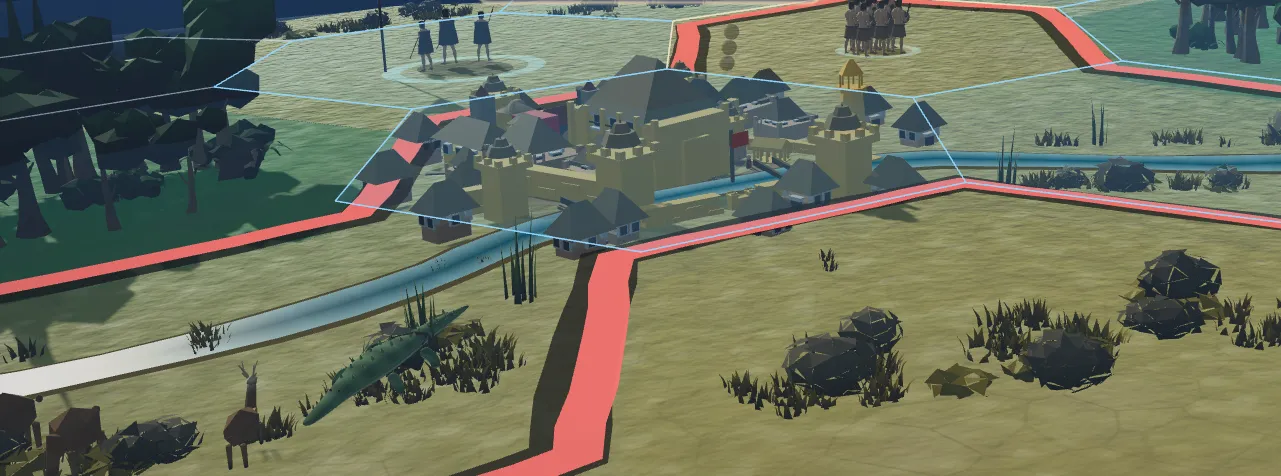
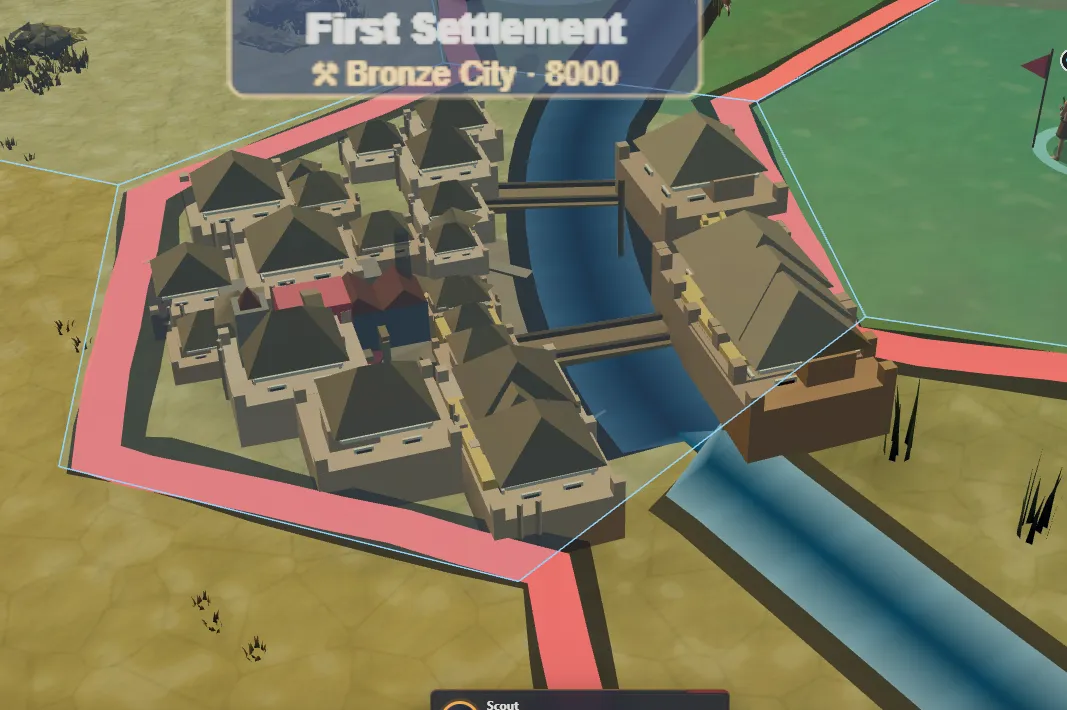
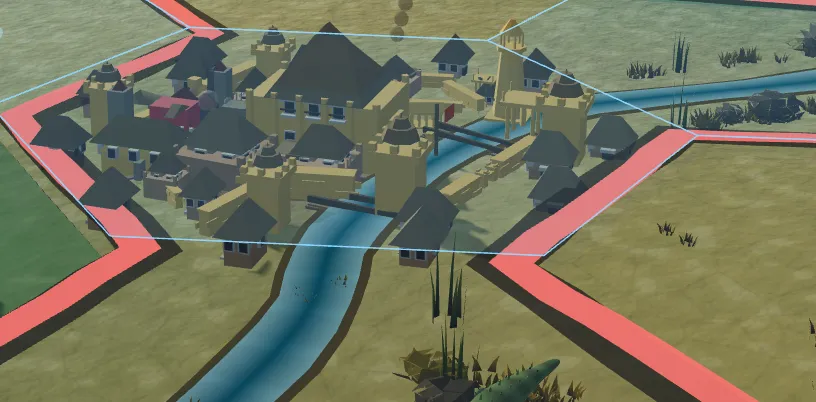
A city is no longer an icon — it is a place
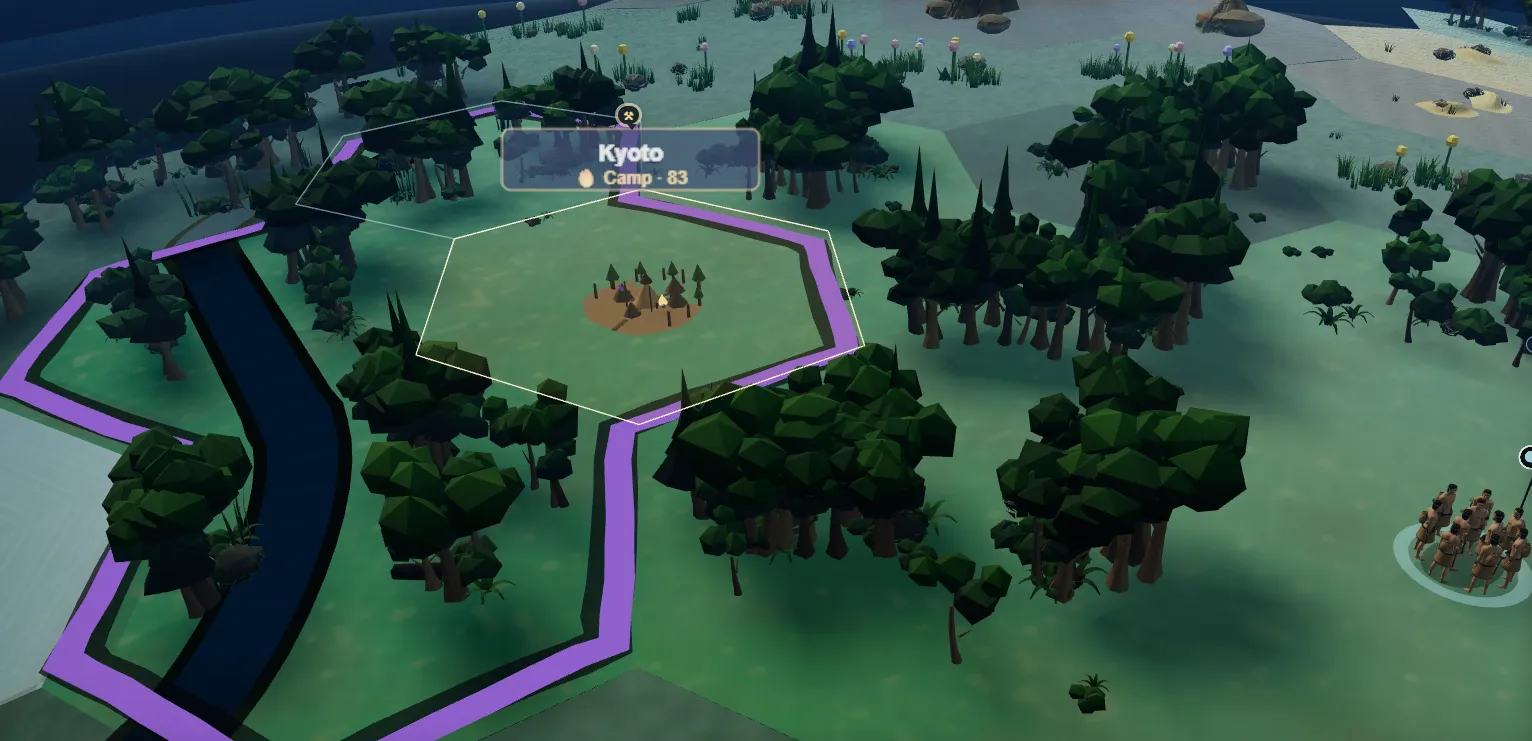
Settlements are laid out on the ground they occupy. A river is not painted under the houses: the channel is cut through the plan, the streets stop at the bank, and bridges carry the town across. Walls arrive with the palisade and the roads re-route to the gate the moment they go up.
Districts, not a build list
Every building belongs to a district type and is raised into a matching quarter — up to four slots each. A quarter filled 4/4 works as a planned whole: +15 % output and stability for the city.
Chains with teeth
A bronze foundry needs its charcoal kiln, a university its academy, a power grid its coal plant — nineteen dependency chains. Build in the wrong quarter and the building runs at 75 %.
Buildings age
A structure more than one age behind your civilization goes outdated and breaks its district’s bonus until it is renovated — for a fifth of its build cost, in your own culture’s style.
Roads follow the walls
An unwalled camp takes its roads straight in. Raise the palisade and the gate ring appears, with every road re-routed to meet it — on the same turn.
Ten ages, one continuous history
Each age brings its own technologies, units, buildings and city silhouette. A campaign crosses all ten, and the game announces every crossing as a moment rather than a number ticking over.
Paleolithic
Fire, foraging, the first camp
Neolithic
Farming and settlement
Bronze Age
Metal, writing, first states
Iron & Classical
Empires and roads
Medieval
Cathedrals and castles
Early Modern
Sail, powder, discovery
Industrial
Steam and the factory
Electrical
Mass society and the grid
Modern
The atomic century
Information
Networks and orbit
Four decisions the whole game is built around
Each of these already runs in the current build — design commitments paid for in engineering, not features on a wish list.
A globe, not a board
Up to 40,962 hexes wrap a real sphere. Rivers run tangent-continuous from highland to sea, mountain chains connect along golden-ratio spines, and coastlines hold together — each world reads as a continent rather than noise.
Progress you can see
Cities grow from a camp through walled quarters to glass-tower skylines; a settler’s walking staff becomes a theodolite, then a satellite receiver. When a building falls an age behind, you can see it on the parcel before the report tells you.
Diplomacy that remembers
Peace is the default and war is declared for a reason — and the desk shows the reason coming: rivalry, grievance, opportunity. Truces expire, weariness accumulates, and a tired AI both offers peace and accepts it.
Every asset authored here
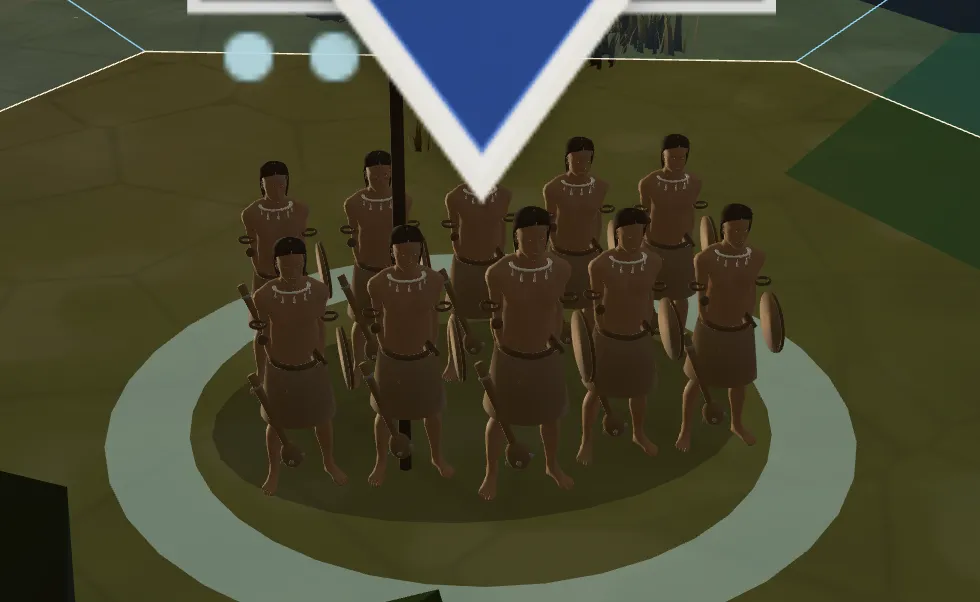
Units are built in my own Blender pipeline: anatomical base mesh, clothing measured off the body, PBR textures baked at 2K, a 26-bone rig, seven animation clips and four levels of detail. Thirty-two humanoid rigs, re-equipped era by era. No marketplace assets anywhere.
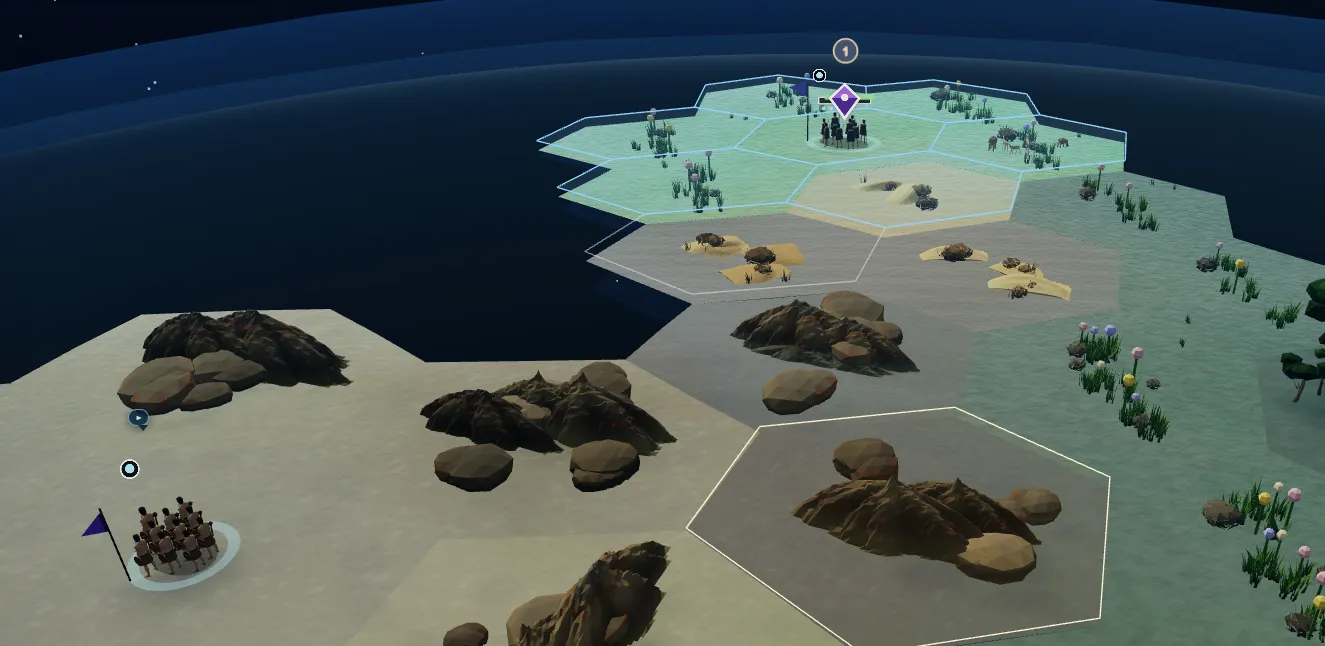
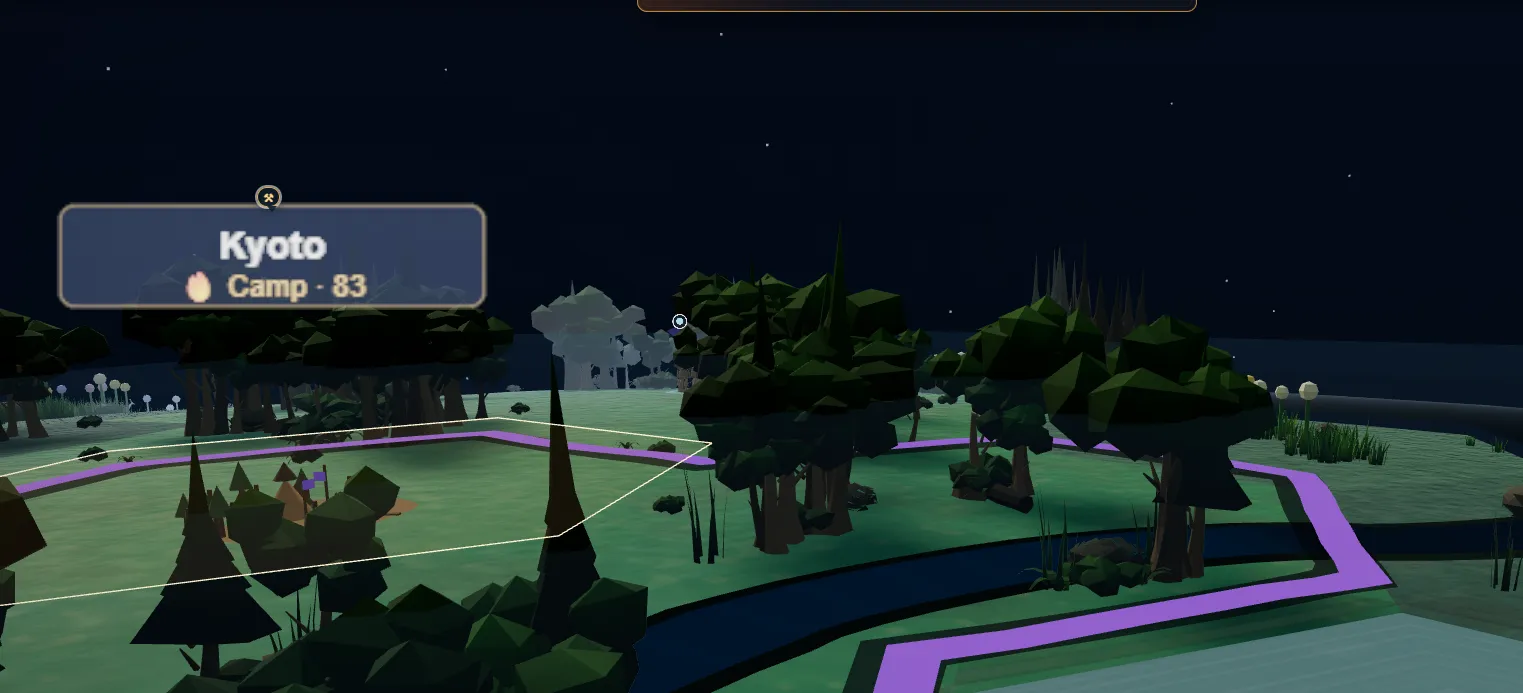
Captured in the current version
Click any frame to open it full size.
Engineering, for the technical reader
A purpose-built engine for large deterministic simulations — not a general-purpose game engine bent into the shape of a strategy game.
Scale without collapse
A 40,962-cell planet is generated in under three seconds and stays inside its memory budget by deferring climate overlays while keeping the geography players actually see. Turn time on a twelve-civilization world came down from 269 ms to 70 ms in one optimization pass.
Deterministic by design
Combat resolves deterministically, so hovering an enemy shows the exact outcome before you commit — damage dealt, counterattack, kills. The same property makes campaigns reproducible and bugs findable.
Measured, then fixed
A 900-turn diagnostic probe found the AI world had gone permanently peaceful — four separate gates each hiding the next. After the rewrite: 21 wars in 900 turns, each ending in a negotiated peace after about forty, and no city changing hands by accident.
Verified continuously
2,432 automated tests across 327 files cover diplomacy, combat, economy, city growth and rendering. A scripted long-run AI campaign runs as a balance gate and must finish with every civilization still alive.
Eight world wonders, one owner each — ever
The first civilization to finish a wonder claims it for the whole game; every rival’s construction dissolves with half the work refunded.
What has shipped so far
Development runs in numbered releases. Each one ends in a playable, tested build — these are the four most recent.
Districts and Skies
Buildings move into district quarters with slots, levels and nineteen dependency chains — and aircraft get decks, carriers and interception.
Units Really March
A movement bug dating back to alpha.108 found and fixed at the source: units had been crossing a few percent of a hex and standing still for the rest.
Old Walls, New Fabric
Buildings fall out of date, break their quarter’s bonus, and are renovated for silver in your own culture’s style. The AI renovates too.
War and Weather
AI civilizations go to war again — and make peace. Plus season and latitude lighting, shadow-casting clouds, sea ice, and city lights seen from orbit.
Era gear for the whole roster
Extending the in-house Blender pipeline so every unit re-equips with its civilization’s age, across all ten of them.
Full campaign, then players
Completing late-age content and economy, then a first public build.
Questions or feedback
The engine, the simulation, the city system and the authored roster are running today. If you want to know more about how any of it works, write to me.
Epoch Ascendant: Civilizations — version 0.3.4-alpha.127 “War and Weather”, in active development.